- Opening hours: Mon. to Fri. 8 a.m. to 6 p.m.

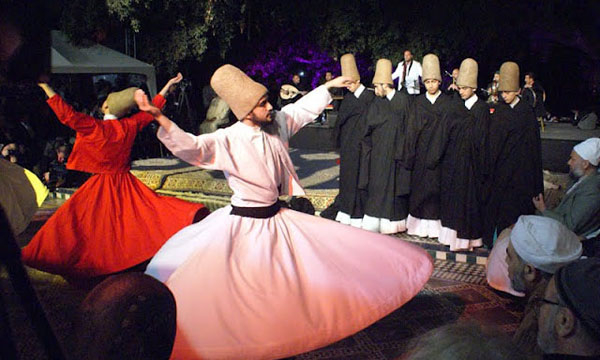
Rich in its magnificent zaouïas and medersas, the spiritual capital has always been a stopover for many Sufi masters. Today, it represents an ideal place to promote Sufi culture and to discover the richness of spiritual heritage, in Morocco and throughout the world, in its artistic, intellectual, and social expressions. It is in this context that Fes is hosting, from 13 to 20 April, the seventh edition of the Festival of Sufi Culture, dedicated to the theme "Spiritual Nourishment (Qût al Qulub): Sufism and creativity". The president of the Festival, Faouzi Skalli, specified during a press conference organised on 29 March to present the programme of this edition that the choice of this theme reflected the desire of the organisers to demonstrate that Sufism is a science of the hearts and a knowledge of "inner states". "The spiritual dimension, when it exists, is, on the other hand, in no way contradictory to other dimensions of art, culture, thought, or society that it can irrigate and nourish. This is what we wanted to highlight in this seventh edition of the Fes Festival of Sufi Culture, by showing how these two dimensions, outer (zâhir) and inner (bâtin), not only complement each other, but allow for the consideration of a new source of inspiration and creativity in all the fields that constitute our human culture," he explained. And he added: "When, conversely, we move towards the diminution of this spiritual dimension, this has the consequence of emptying the religious meaning of its true substance and substituting it with a social and political ideology that distances or diverts it from its purpose". In this context, the Batha Museum in Fes will be the theatre for conferences, concerts, round tables, and evenings of samaâ and mouwashahat, focusing on the theme of spiritual nourishment. "The Festival promises the public this year to experience moments of grace through a rich programme, which will allow for the apprehension of the encounter between spirituality and creativity, in different cultures of Moroccan civilisation, and more broadly of Islam," indicated Faouzi Skalli, commenting on the programme of this edition of the Festival. Thus, Sufi brotherhoods from Morocco (Zamane al Wasl, Tariqas Ouazzaniya, Squalliya, Harraquiya and Qadiriya Boutchichia and Darqawiyya), but also from Syria (Hamâm Khaïry and the Takht ensemble of Abderrahmane Kazzoul), Turkey, and Palestine, will take part in the Festival this year. A concert led by the Moroccan singer Ihsane Rmiki, a specialist in Arab-Andalusian songs, will also be on the festival's menu.
On the intellectual side, round tables and conferences spread over the whole week will be led by academics, researchers, and masters of Sufism from the four corners of the world. Leili Anvar, Amal Arfaoui, Bariza Khiari, Touria Ikbal, Salamatou Sow, Mourad Rifi, Azizi Idrissi, Éric Geofroy, and Marie-Odile Delacour are among the speakers who will help the public discover the different facets of Sufi thought. They will examine themes focusing, among others, on Sufi samaâ, Sufism and philosophical thought, Sufism and poetry, art and spirituality, Sufism and heritage, Sufism and contemporary and social thought, the spiritual legacy of Morocco, and the singularity and universality of the spiritual experience. As a closing to this Festival, the organisers decided to dedicate the last day to the soul of a contemporary figure of Sufism, the anthropologist and writer Zakia Zouanat, who has just passed away, leaving as a spiritual testament a major work, including her book "The Kingdom of Saints". By devoting her efforts to the rediscovery of Sufism for the benefit of the modern world, by illuminating its ethical, spiritual, and social values that founded the respect and sacralisation of saints among Moroccans, Zakia Zouanat contributed to making the history of Moroccan Sufism known to today's public.
The transmission of Sufism took place from the 13th century through brotherhood centres which had the merit of preserving the forms of culture, spirituality, and sociability specific to Islam. These brotherhood centres, zaouïas or ribats, played a traditional role of mediation of peace between communities with a view to preventing or resolving conflicts. The religious Sufi brotherhoods of Morocco have also, over time, experienced international influence and spread into a multitude of branches in different countries. The case of the Tijaniya and Qadiriya zaouïas is, in this respect, an eloquent illustration. The roles of these Sufi paths, both of teaching, civic and spiritual education, commitment to human development, and mediation of peace, in addition to a deep and creative cultural legacy, have constituted the matrix of Islamic culture in Morocco.
-* Saturday 13 April: Sufi mouashahat from Syria by Hamâm Khaïry and the Takht ensemble of Abderrahmane Kazzoul.
-* Sunday 14 April: Ihsan Rmiki (Zaman Al Wasl group/Thami Belhouat): Sufi mouashahat and Arab-Andalusian songs (Morocco).
-* Monday 15 April: round table: singularity and universality of the spiritual experience.
-* Tuesday 16 April: round table: Sufism and heritage.
-* Wednesday 17 April: samaâ concert of the Rifaïa tariqa from Palestine.
-* Thursday 18 April: samaâ of the Khalwatiyya tariqa from Turkey in the presence of Sheikh Fatih Nurallah.
-* Friday 19 April: Sufism and philosophical thought.
-* Saturday 20 April: tribute day to Zakia Zouanat.
Provider / Source : Afaf Razouki, Le Matin