- Opening hours: Mon. to Fri. 8 a.m. to 6 p.m.

Upgrading tourist circuits that integrate handicrafts, multiplying tourist flows to heritage landmarks, extending the length of stay and increasing the average expenditure per tourist on the purchase of handicraft products. These are the objectives of the "Artisanat et Fès Medina" project, included in the Millennium Challenge Corporation (MCC) programme implemented with the Agency for Partnership and Progress (APP). It essentially aims to promote memory tourism by highlighting the know-how of Fes artisans.
After the Marrakesh artisans, who benefited from a similar project inaugurated last March, it is the turn of the artisans of the Kingdom's spiritual capital to strengthen their capacities to promote their products. This is thanks to the strengthening of links between the handicraft sector, the spiritual, historical, tourist and urban heritage of the Medina of Fes, and the tourism sector.
This project, which aims to bring handicraft production districts and spaces out of the shadows, was inaugurated at the end of April by the Ministry of Handicrafts in partnership with the APP-MCC. Aiming to highlight the tangible and intangible cultural heritage of the Medina of Fes, the six implemented circuits house more than 2,113 points of sale for handicraft items or services. Thanks to these circuits, which span a 21 km route, including 10.5 km within the Medina walls, tourists can now discover Fes differently. They can therefore stroll through the Medina, passing through circuits titled, for instance, "Artisanat", "Connaissances et savoir-faire", "Monument et Souk", "Murailles et fortification", "Palais et jardins andalous" and "Fès Jdid".
Among others, the "Murailles et fortifications" circuit, which lasts 2 to 3 hours by bus, horse-drawn carriage, car or taxi, will allow visitors to dive into the heart of the city's history, discover the architectural heritage and the main historical gates of the Medina, from the Royal Palace gate to the famous "Bab Ftouh", passing through Place Moulay Hassan, the "Kasbah des Chrardas", the "Borj Sud" and the "Borj Nord".
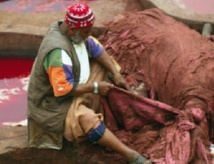
For its part, the "Artisanat" circuit, which lasts 4 hours on foot, will allow for the discovery of workshops and handicraft points of sale through the exploration of the Souks of the Medina, starting from Place "Boujloud", then Place "Lalla Yedouna", crossing the "Fondouk Tazi", and wandering through "Souk Henna", "Sekkatine", "Kissaria El Kifah", Rue "Méchatine", and the "Chouara" tanneries.
These circuits have spared no craft trade. Indeed, workshops dedicated to embroidery, traditional weaving and brocade have also been highlighted as part of the "Connaissances et savoir-faire" circuit. Lasting 3 hours on foot, this circuit starts at "Bab Guissa" and ends at "Jamaa Al Anouar", introducing visitors to the "Al Andalous" mosque, the "Chouara" tanneries and the "Bab El Guissa" mosque.
This enhancement has resulted, in addition to the design of the circuits, in the installation of 308 tourist signposts, including 228 for orientation, 70 for heritage interpretation and 10 for information.
The objective for the project's promoters is to equip the multiple attractions with strong cultural and historical connotations located in the Medina with appropriate tourist signage, allowing visitors better guidance for tourist circuits in addition to explanations and descriptions dedicated to the numerous sites and landmarks of history, art and architecture.
It should be noted that eventually, 2,163 artisans will benefit from this programme in Fes, whose know-how will be valued through the guidance of tourists towards spaces and zones for the production and sale of handicraft products.
This commendable initiative should also integrate other imperial cities that also need to value their handicraft heritage, such as Meknes, Safi and Essaouira.
Provider / Source : MOHAMMED TALEB, Libération