- Opening hours: Mon. to Fri. 8 a.m. to 6 p.m.

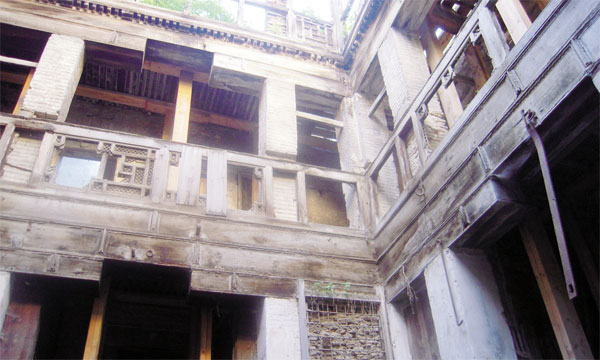
On the occasion of the celebration of Heritage Month from 18 April to 18 May, the city of Fez hosted debates, round tables and study days on the issue. And as usual, various speakers recall that the Medina of Fez, the most medieval of North African cities, was classified in 1981 on the list of world heritage of humanity by the United Nations Educational, Scientific and Cultural Organisation (UNESCO) and that its safeguarding and the preservation of its authenticity are confronted with several obstacles. It is cited in particular demographic pressure, the threat of ruin and the lack of financial means. However, it was a question that all those involved in the rehabilitation of the Medina of Fez (Ministry of Culture, Ministry of Tourism, local authorities, etc.) must combine their efforts to fight against the constraints that weigh on the preservation of this jewel of world heritage. But beyond words, everything that has been done since the 80s and 90s, in response to these problems of the Medina, from the Royal Letter to the launch of pilot projects by patrons and structuring projects within the framework of the World Bank programme and the programme for buildings threatening ruin, remains very insufficient. Its Riads, Medersas, fountains and Fondouks are falling into ruin and its architectural character is deteriorating. And this, despite many good initiatives, such as the launch of the Tourism Development Plan PDRT with, among others, the acquisition of old houses for their conversion into charming hotels, the Tourism with the Inhabitants Programme, the encouragement of the offer (Guest Houses), the conversion of certain Fondouks into accommodation and craft exhibition venues and the rehabilitation of spaces such as the My Driss-Karaouiyine-Sidi Ahmed Tijani triangle, Aïn Azliten and Bin Lamdoun district, Medersas, Boujloud Square, R'cif Square and Oued El Jawahir. Also, volunteers, painters, students or simply heritage enthusiasts work within the framework of associations for the safeguarding of this historical capital. The most dynamic is the Association of Young Volunteers of International Worksites which has worked on several historical sites in partnership with foreign organisations, including the Rempart network and Solidarity and Youth in France and other associations in Belgium and Italy. And relies on volunteers, painters and experts in the restoration of monuments or in construction techniques and who have participated in the restoration of Medersas like Charratine and other old houses and monuments of the city.
Note that the Agency for De-densification and Rehabilitation of the Medina of Fez (A.D.E.R) also pilots restorations. It commits to financing 50% of the restoration costs of certain old houses and proposes to the owners to finance the remainder. But the initiative is handicapped by the fact that most of the inhabitants do not have the means to pay their share. For its part, the city council participates in the restorations of certain houses, but its interventions often depend, according to observers, on the proximity of the owners to the dominant political party. It is content to support houses and alleys for several years, with wooden and steel pillars that disfigure them.
Today, the only way out of the disastrous situation of the monuments and traditional houses of Fez is the Five-Year Restoration Programme (2013-2017) launched recently by His Majesty King Mohammed VI. With a total investment of 615 million dirhams, this programme should concern nearly 4,000 buildings threatening ruin as well as 27 monuments and historical sites of the Medina of Fez. The restoration programme should also cover tanneries, bridges and Medersas built by the Merinid dynasty between the 13th and 14th centuries. It remains necessary that local officials are up to the task of this great safeguarding project and that they finally become aware that an important part of human heritage is disappearing and that a global rehabilitation strategy for the Medina is more necessary today than ever.
Foreign experts who participate in the worksite of the Association of Young Volunteers of International Worksites, have often pointed the finger at the anarchic restorations and rehabilitations of the Medina of Fez, piloted by the private sector or by certain organisations, including the city council where cement is used, which is a material not adapted to all supports. According to them, cement is a waterproof material that traps humidity in the stones or wood, which deteriorates old buildings and historical monuments and leads to their destruction over the years. A finding that we have been denouncing for a few years in the columns of the newspaper "Le Matin". But the situation persists and the cement lobby seems, alas, to have the last word...
Provider / Source : Rachida Bami, Le Matin