- Opening hours: Mon. to Fri. 8 a.m. to 6 p.m.

Le Matin: The Fès Festival of World Sacred Music aims, this year, to be a tribute to Andalusia. Why this choice?Faouzi Skali:
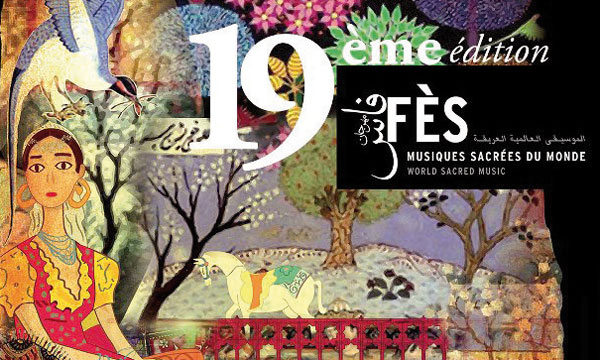
The heritage of Andalusia is present everywhere in Morocco, and especially in Fès, through genes, history, and the exchange of know-how in terms of craftsmanship, architecture, art, and even gastronomy. It seemed appropriate to us to organise this 19th edition around the spirit of Andalusia, and thus to pay tribute to Andalusia through Fès, and to Fès through Andalusia... It must be remembered that medieval Andalusia was, for 8 centuries, a natural extension of Morocco. During this long period of history, there was the development of an extremely rich and profound culture, which marked universal history. As a result, Andalusia became a kind of heritage through its symbolism, particularly regarding its ability to manage the diversity of religions, cultures, and civilisations.
Can you present the opening show "Love is my religion", which, like the last few editions, is an original creation of the festival?It is as difficult to create an original production as it is to organise the Festival as a whole. It is complex work, which requires harmonisation and coordination of efforts, and which requires having a concept, a common thread, a script, and a purpose. This show is part of this creative process, followed for years by the Festival, and which is distinguished by its depth and originality. Mixing poetry, choreography, and music, "Love is my religion" is a show that tells the story of the creation of Andalusia in five tableaux. This artistic epic, directed by Andrès Marin, one of the most significant flamenco artists, will feature the participation of artists Carmen Linares, Amina Alaoui, and Andrès Marin, among others. The other interesting aspect of this original creation is that it can travel the whole world and become a kind of relay and ambassador for the Festival throughout the year.
What will be the other highlights of the Festival this year?What distinguishes our Festival is that it allows the public to take a journey through time and space around a theme and a common thread. In addition to the opening show, this year's programme is characterised by the presence of great world-renowned artists, including the legendary Paco de Lucia, Asala, and Patti Smith, a rock legend and great figure of spirituality. There are also the nights of the Medina which will take place in the most iconic sites of the old city and which will welcome artists from the four corners of the world to present their melodies and committed lyrics to the public. Alongside this, there is a set of parallel activities, including the Sufi nights which are very popular with the public, exhibitions, and film screenings.
You place great importance on the debate aspect, within the framework of the forum "a soul for globalisation". What are its particularities this year?The forum has become a place where the Festival public systematically registers, experiencing an ever-increasing turnout from year to year. In this sense, we are continuing our momentum to take up the challenge of creating in Fès a kind of world forum on spirituality that focuses on economic and social issues. Indeed, spirituality is becoming a necessity in our modern societies because it enriches and enlivens them with what they lack the most. This year, the forum, which will see the participation of a range of international personalities who will come to debate current issues, will be opened in the presence of the French Minister of Justice, Christiane Taubira, who is expected to speak as part of a tribute paid to Aimé Césaire.
Why organise the Festival in the city with free concerts, on the sidelines of the Festival of Sacred Music?This is an initiative that aims to create a kind of social solidarity. Indeed, there must be free activities, so as not to exclude those who cannot pay. But at the same time, the fact of having a paid aspect makes it possible to value the Festival.
The Fès Festival of World Sacred Music will soon blow out its 20th candle. What has been the economic and social contribution of this Festival to the city of Fès?On the eve of the Festival's 20 years, we will first take the time to take stock to measure its economic and social impact on the city. However, I would like to point out that, during this period, many things have changed in Fès. For example, in terms of tourism, Fès, which was a transit city, is starting to retain tourists. This period was also marked by the creation of guest houses (Riads), which did not exist before, and also homestays which have experienced, thanks to the Festival, considerable development. Furthermore, and thanks to the Festival, I can say that Fès has been completely repositioned on the world map, as a kind of renewed Andalusia.
Provider / Source : Afaf Razouki, Le Matin