- Opening hours: Mon. to Fri. 8 a.m. to 6 p.m.

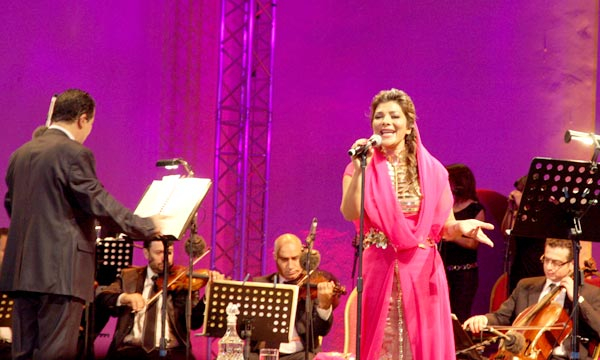
If the show delivered last Saturday by this outstanding guitarist was truly a very great success, the mythical Bab Al Makina square was unable on Thursday evening to contain the human tide that came to attend the beautiful performance of the Syrian singer Assala Nasri. For this concert scheduled for 9:00 p.m., it was indeed necessary to show a lot of patience and above all to keep one's cool. Monster traffic jams formed from 7:00 p.m. on the roads of Bab Boujloud and Aïn Kadouss, and motorists had to park their cars further away and walk a lot to access the site. Because it was not only the inhabitants of the spiritual capital who wanted to contemplate their idol. Cars with licence plates from Rabat, Casablanca or Taza were just as numerous. To have the privilege of attending this show, the majority of this beautiful crowd willingly paid 400 DH, since the 200 DH seats sold like hot cakes, and from the very first days of the Festival. But those who love do not count, the artist's fans will reply! At the entrance to Bab Al Makina, the police and security staff were overwhelmed at times by the crowd. When Assala Nasri appeared on stage, a quarter of an hour late, the public let themselves be carried away by the childlike voice, tinged with sorrow, of this legend of contemporary Arab song, creating an exceptional festive atmosphere. The artist followed, without any respite, the successful titles of her rich repertoire to the glory of love, the homeland and beauty: "Ya majnoune", "Samihtek", "Ouala Tssadak", or "Yamine Allah" etc. Her melodic voice and the famous mawals of Sabah Fakhri resounded further away. In her communion with the Moroccan public, Assala Nasri went all the way on Thursday evening, by interpreting with brilliance "J'en ai marre", the song of her "great friend", the Moroccan Asmaa Menouar. And promise kept. In a pre-concert press conference, she had promised a "surprise" to the Festival public and she really kept her word. Accompanied by maestro Yahya Mouji, a great name on the Arab artistic scene, she sang pieces to the glory of art, and which she dedicated to the memory of the late His Majesty Hassan II, a "great statesman who greatly appreciated art and artists," she explains. It must be said that for her first performance at the Fez Festival of Sacred Music, the artist satisfied her fans and her show made people forget the surprise absence of Arab artists of this calibre at this edition. Fez indeed represents a lot for this artist, as she herself recognised. It reminds her of her childhood years in the alleys of Damascus, which have great similarities with those of the spiritual city of Morocco. It must also be said that if eyes were riveted on the artist on Thursday evening, hearts were surely towards Syria, her country of origin ravaged by war. And as Assala so well said, who proclaimed her support for the opposition very early on, song can help to "resolve the crisis" and "the artist always has a message of peace and love to convey". Originally from Damascus, Assala Nasri evolved in an environment avid for art and song. Her father is none other than the great artist, Mustapha Nasri. As a young child, she was a fan of the diva of Arab song of all time, Oum Kalthoum, and the nightingale Abdelhalim Hafez, but her favourite idol was none other than Fairouz, the singer with the angelic voice. Law tiaarafou (If you knew!), recorded in Cairo in 1993, was her first album that enchanted a public fond of refined art. After this first success came (Ouala Tssadak), then (Ighdab) where she sang for the great Syrian poet Nizar Qabbani. This song allowed Assala to join all the great stars who sang for this poet. Assala continued her artistic journey with several albums, notably "Albi Biértahlak", "Ya Magnoun", "Yamine Allah", "Awgat", "Hayati". The Khaliji style, which she interprets wonderfully, contributed even more to the success of her artistic career, especially with the launch of the first 100% Khaliji album Awgat in 2004. Today, she is a major artist of the Arab world who performed on Thursday evening in Fez.
Provider / Source : MAP, Le Matin