- Opening hours: Mon. to Fri. 8 a.m. to 6 p.m.

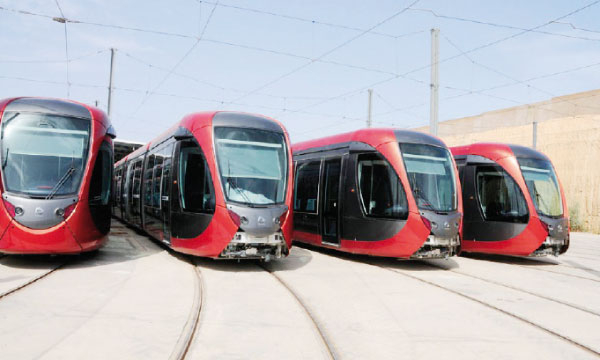
Alstom is preparing to officially inaugurate its cabling and electrical cabinet factory in Fez. The result of a joint venture held in equal parts with Nexans, the site required an investment of 300 million euros. The factory has been operational since the beginning of 2012, producing in particular the electrical cabling for Moroccan trams. The company is initially developing cable harnesses and electrical cabinets (sub-assemblies integrated into the trains' nervous system) that equip some of Alstom's rolling stock intended for the Moroccan market, such as trams. In a second phase, the factory will diversify its activities to gradually start producing cable harnesses and railway electrical cabinets intended mainly for export, in order to satisfy other railway clients and clients in other sectors. The inauguration of the site was supposed to take place in June. This event has been postponed, and the exact date of the official inauguration will be known after the Alstom Morocco Board of Directors meeting scheduled between the end of June and the beginning of July. However, it is still planned for this summer.
According to the company's management, the Fez industrial site has been in a training phase since 2013 for the electrical cabling of several new generations of regional trains entering production in Europe. The ramp-up of the factory must in fact respect the time necessary for the training of newly hired personnel and the complex and progressive qualification processes required by the railway industry, the company's management indicates. At the beginning of 2013, the factory had about 120 employees, a workforce that will double by the end of the year before reaching 400 jobs in 2015 and 650 in 2018 to allow for optimal production capacity for both the local market and export.
In this industrial unit, Alstom provides the products and the work, and Nexans its industrial expertise. This project will allow for the realisation of an annual turnover expected to increase from 28 million euros in 2015 to 61 million in 2018. Let us recall that this investment is the first objective defined in the strategic industrial partnership agreement between Alstom and Morocco signed in January 2011, which provides for Alstom's active commitment alongside Morocco to develop the country's railway sector. For the French group's subsidiary, this project accompanies Alstom's commercial strategy which, in an increasingly competitive global railway market, aims to offer more innovative and competitive solutions, in Morocco as well as for the entire railway market. The company also reflects Alstom's policy in Morocco, which aims to support the development of the market and the railway sector, thanks in particular to the development of skills and industrial know-how. Regarding industrial integration, it is unknown whether Alstom is already working with local SMEs. But what is certain is that seven European suppliers, already known to Alstom in the field of sheet metal work, composite lining, and railway engineering design offices, are established or in the process of being established in Morocco. Alstom states that it asks these suppliers to transfer their technology to Morocco and to train local labour. Furthermore, the company intends to install, in collaboration with the ONCF, a workshop for the assembly of TGVs. At the end of 2010, the railways and Alstom had, as a reminder, signed an agreement for the supply to Morocco of 14 double-decker very high-speed trains (Duplex). Commercial service is scheduled for December 2015. The 14 trainsets will be designed and manufactured mainly in France at Alstom Transport sites. They will be delivered in separate elements (power cars and carriages) to the ONCF workshop in Moghogha located north of Tangier, where the trainset assembly operations will be carried out. The Fez factory is used, among other things, to produce cable harnesses and electrical cabinets that equip these ONCF Duplexes. Finally, let us highlight that Alstom has entrusted a company based in Morocco with the "help-desk" (IT support) for its employees working in French-speaking countries: France, Belgium, Canada, and Morocco. It has also signed three agreements with the Hassania School of Public Works, the Mohammedia School of Engineers, and the Mohammed V Agdal University with a view to developing a railway training sector in Morocco.
Provider / Source : Moncef Ben Hayoun, Le Matin