- Opening hours: Mon. to Fri. 8 a.m. to 6 p.m.

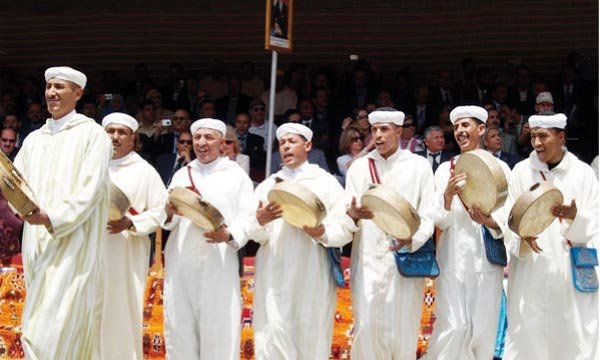
With a most enticing artistic line-up and a space dedicated to debate, reflection, and cultural exchange, the Fez Festival of Amazigh Culture has, once again, kept all its promises. From 5 to 7 July, the public was treated to concerts given by big names in Moroccan music such as Najat Atabou, Abdelaziz Stati, Fatima Tihihit Banou, Majid Mourad, and the groups Lkwaser and Bhal Bhal, all of whom led the audience through a sequence of danceable rhythms and enchanting melodies. The Spanish group Flamingo Tbalo and the Italian group Trizzi Ridonna, as well as the Algerian Ali Amrane, brought a touch of diversity to the Festival, allowing the public to open up to new musical styles. In addition to the concerts, poetry readings, carpet exhibitions, and visual arts also attracted a large public, eager to familiarise themselves with the different facets of Amazigh art and culture. The segment dedicated to debate within the framework of the international congress on the theme "Amazighity and Andalusia: right of belonging and hospitality", which saw the participation of national and foreign experts and civil society leaders, was also one of the highlights of the Festival. This congress represented an opportunity for participants to discuss issues related to exchanges throughout history, as well as migration and culture and their contribution to development and Euro-Maghreb dialogue. At the end of the proceedings of this meeting, the participants stressed the need to set up Moroccan-Spanish working and research groups to collaborate, through seminars and forums, to document shared memory, calling for the inclusion of the history of Andalusia in school curricula. The participants also agreed on the importance of establishing an inventory of the most important publications on Amazighity and Andalusia and translating them into the Amazigh and Arabic languages, as well as accelerating the introduction of Amazighity into the public life of Moroccans. It should be noted that the Chairman of the Board of Maroc Telecom, Abdeslam Ahizoune, was the Amazigh personality honoured this year by the Festival's organising committee for his commendable efforts in promoting the Amazigh language and culture and his services rendered in the socio-economic, political, sporting, and technological fields. For his part, Mr Ahizoune said he was very honoured by this tribute, affirming that Amazigh culture represented an essential component of national identity and a heritage shared by all Moroccans without exception.
The contribution of the Amazighs to the heritage of Andalusia was at the heart of the international congress organised within the framework of the Fez Festival of Amazigh Culture. Hassan Laaguir, Director of Cooperation and Research at the Euro-Arab Foundation for Higher Studies in Granada, scrutinised the various aspects of the contribution of Amazigh culture to Andalusian civilisation, whether in terms of politics, culture and art, architecture, or gastronomy. During his speech, Mr Laaguir also combined historical analysis with a reading of the traces of the Berbers that still persist in Andalusia (toponymy, historical monuments, manuscripts, etc.).
Provider / Source : Afaf Razouki, Le Matin