- Opening hours: Mon. to Fri. 8 a.m. to 6 p.m.

Le Matin: Which sites in the city of Fez did you visit for the Earth Day celebration? And what was the objective of this action?
Abdelhay Raïss: This year, to celebrate Earth Day, we at the Regional Forum for Environmental Initiatives chose to carry out local actions by going into the field to diagnose the current environmental situation in the city of Fez. In this context, we visited the Jnane Sbil garden, the Racecourse Park, Majid Park, the Dekkarate gardens, the Lalla Amina Garden, the municipal nursery, Place Florence, and the controlled landfill of Fez, among others. The objectives of this action were to draw attention to the dysfunctions affecting the environment in the city, to exchange innovative visions and ideas regarding environmental matters with officials, to highlight successful environmental experiences that can serve as models for the future, and to propose project ideas capable of addressing the challenge of sustainable development. What observations did you make following these field trips?
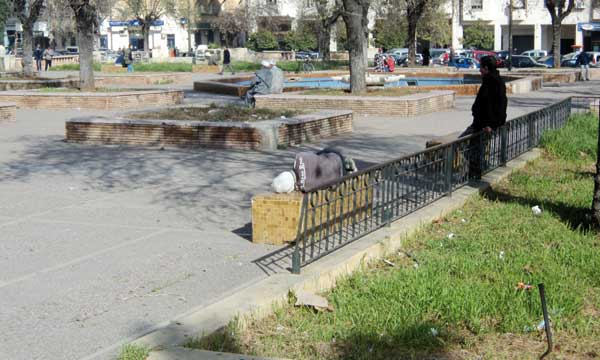
Unfortunately, we made a very damning observation after these field trips. Indeed, the majority of the sites we visited are either abandoned or in an advanced state of disrepair due to a lack of maintenance and negligence. This is the case for Majid Park, the Dekkarate gardens, Place Florence, and even the municipal nursery, which in the past played a primary role in providing plants and flowers to the city's gardens and green spaces.
Regarding the controlled landfill of Fez, the foul odour emanating from the site, which is located near the Sidi Harazem thermal station, continues to be a major concern for the inhabitants of several districts of the city, even those located several kilometres from the landfill site, such as the Narjis district or the Aïn Chkef district. For us, the only sources of satisfaction during these visits were provided by the Jnane Sbil Garden (the oldest public garden in the city), which benefited from a major renovation operation between 2006 and 2010, the Lalla Amina Garden, and Hassan II Avenue. These green spaces are benchmarks in terms of maintenance and landscaping and constitute examples to follow. Can you give us an overview of the green spaces in the city of Fez?
We can say that today in Fez there is a worrying expansion of concrete at the expense of green spaces, which are true reservoirs of oxygen and play a very important role in the physical and mental balance of people. Thus, the city of Fez, which has more than a million inhabitants, has only 2 million m² of green spaces. This means that compared to international standards, which stipulate that each inhabitant should benefit from at least 10 m² of green space, Fez is very far from the mark with only 2 m²/inhabitant. Indeed, the city's development plans are designed without taking into consideration the well-being of the city's inhabitants. Consequently, the various districts of the city find themselves devoid of green spaces, public gardens, and children's parks. The Aïn Chkef forest constitutes a true green lung for the city of Fez. How is it faring?
Increased urbanisation constitutes a real threat to the Aïn Chkef forest. This forest, which is very important for the city of Fez, is also left to the irresponsible attitudes of citizens. Thus, to enhance this natural site, we proposed to the High Commission for Water and Forests and the Fight against Desertification a project for an environmental education centre, which will be located in the heart of the Aïn Chkef forest. This project will be equipped with adequate didactic and pedagogical tools to instil an ecological spirit in children, forge an eco-citizen commitment in them, and prepare them for the environmental challenges of the future. What about the Fez Botanical Garden project, proposed by the forum and which was supposed to see the light of day in 2011?
The Fez Botanical Garden project did not see the light of day because the city's municipal council terminated the partnership agreement that linked it to the Forum and the Sidi Mohamed Ben Abdellah University for the creation of the Garden and allocated the 7-hectare plot of land, on which the garden was to be built, for rent. This environmental project, which was designed to offer the inhabitants of Fez and its visitors real green spaces, was to contain collections of wild Mediterranean plants and medicinal, utilitarian, food, and industrial plants, and give plant enthusiasts the opportunity to discover new species with their scientific and common names. What must be done, in your opinion, to restore Fez's reputation as a green city?
While today the environmental situation in Fez is very alarming, in the past, gardens and green spaces were part of the heritage linked to the history of the spiritual capital, giving it the reputation of a green city. For Fez to succeed in regaining its former place and offering its inhabitants a pleasant living environment, there must be an awareness among public authorities and inhabitants of the importance of green spaces and the need to preserve them. It is also necessary to focus on the mobilisation of all means, the synergy of efforts from various stakeholders, and, above all, the establishment of good governance in the management of the city's affairs.
Provider / Source : Le Matin