- Opening hours: Mon. to Fri. 8 a.m. to 6 p.m.

The Fassis, very attached to ancestral Ramadan traditions, are keen to make this holy month a privileged occasion to get closer to God, and to gather as a family around a well-stocked ftour table in an extraordinary atmosphere. Throughout this holy month, young and old see their days and nights turned upside down by an exceptional rhythm and a unique atmosphere of conviviality and human warmth, reigning over the whole city. The adventures of this important religious event begin, beforehand, with rituals well-anchored in the traditions of Moroccan society. Thus, mothers mobilise alone or in groups to make delicacies and traditional dishes such as "selou", "briouat", or "chebakia", which are found on all Fassi household tables during this holy month. Moroccan gastronomy continues to be in the spotlight throughout the month of Ramadan, thanks to the efforts of mothers, who get to work from the morning to present to their loved ones a ftour table presenting all kinds of delicious dishes. In addition to the famous Moroccan soup "Harira", which remains the star of Ramadan tables, the menu is often composed of "rghayf", "batbout", "baghrir", "tajine", etc.
Because of their busy schedules, other housewives who do not have the time to spend hours and hours in their kitchen find their happiness in the many shops that flourish in the different corners of the city during the month of Ramadan, making all kinds of delicacies available to these ladies. Furthermore, traditional clothes experience a particular craze during the holy month. On the eve of Ramadan and throughout this month, the Fassis rush to the sellers of traditional clothes to obtain caftans, djellabas, or gandouras. Essential pieces for the occasion, which illustrate the Moroccan customs and traditions that go hand in hand with the spirit of Ramadan.
Representing an opportunity to get closer to God, Ramadan is above all a month of piety and spirituality. The mosques of Fes, known for their historical and architectural specificities, record record attendance for this purpose during this holy month. Thus, after the ftour, many worshippers, accompanied by their friends and children, go there to perform the Al Ichaa and Taraouih prayers.
During the day, worshippers can also recite the Quran collectively, or follow conferences and religious courses. And since Ramadan is the month of generosity and solidarity, charitable actions and "Iftar" (breaking of the fast) operations are regularly organised to support needy families and share with them the joys of the holy month.
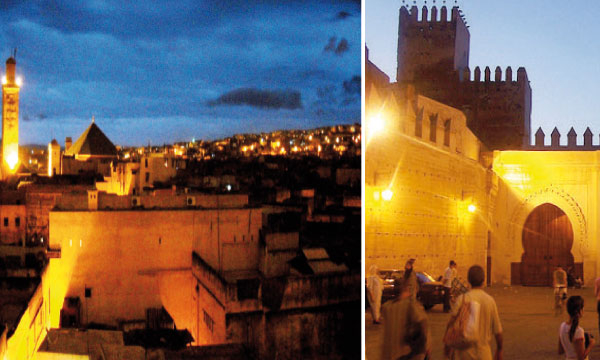
Night atmosphere: Like the days, the nights of Ramadan in Fes have a particular rhythm. Thus, after the Taraouih prayer, it is a very lively night atmosphere that rocks the city of Fes during the holy month. While some set their sights on cafes to relax and have fun, chat with friends, or engage in a game of cards, others prefer to stroll along the main arteries of the city to escape the monotony.
Synonymous with conviviality and human warmth, Ramadan also constitutes a privileged occasion for Fassi families to meet with their loved ones and strengthen ties, by exchanging night visits in an atmosphere imbued with joy and sharing.
Provider / Source : Le Matin